what was said and what was left unsaid?
Dr Ros Jones
On October 20th, Baroness Hallett published the next report from the public inquiry and as with the previous modules, what she doesn’t say is as important as what she does.
The full report is available here and a shorter version here.
In the press briefing, Baroness Hallett highlighted the following [annotated by me]:
- Many millions of people across the UK receive adult social care… For them and those..providing their care, the pandemic [policies] totally disrupted their daily lives and had a devastating impact.
- tragic consequences….more than 43,000 recorded deaths [purportedly] involving Covid-19 in care homes.
- not enough [or too much of the wrong things] was done to protect those living and working in care homes.
- the claim that a so-called “protective ring” had been thrown around care homes “right from the start” was unfounded [and mendacious].
- many families and loved ones were barred from visiting care homes…stopping these visits had [predictable] far reaching and devastating consequences.
- the deeply troubling issue of do not attempt cardio pulmonary resuscitation notices [was unlawful].
- there were concerns that these notices were improperly imposed on groups of people such as people with learning disabilities or older people. This should not have happened [but it did].
Other claims and the resultant recommendations are highly debatable:
- The decision to discharge patients from hospital was [un]necessary in order to free up hospital beds [for whom?].
- guidance should have advised that discharged patients be isolated. Isolation was perhaps the only truly [in]effective precaution available to care homes at that time.
- The country was facing a deadly [fear] virus which was spreading rapidly
- Politicians had to make undoubtedly difficult choices [such as which night to meet their lover or what party to attend!].
- The inquiry has found no evidence of national policies condoning their [DNACPR] blanket application [but didn’t look very hard].
Hallett acknowledged that adult social care has always been an underfunded under-resourced service. She commented that “The adult social care sector as a whole also appeared to be something of an afterthought, where the mantra of ‘protecting the NHS’ sometimes came at the expense of the users and providers of care.”
She was especially critical of the government claim that they had put a ring of protection around the elderly, which was clearly far from the truth.
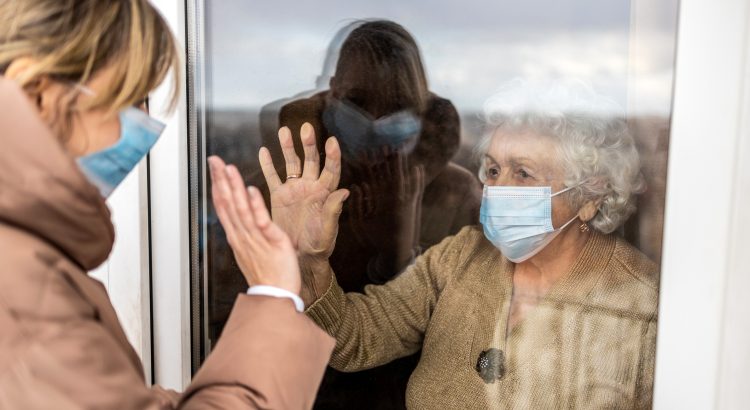
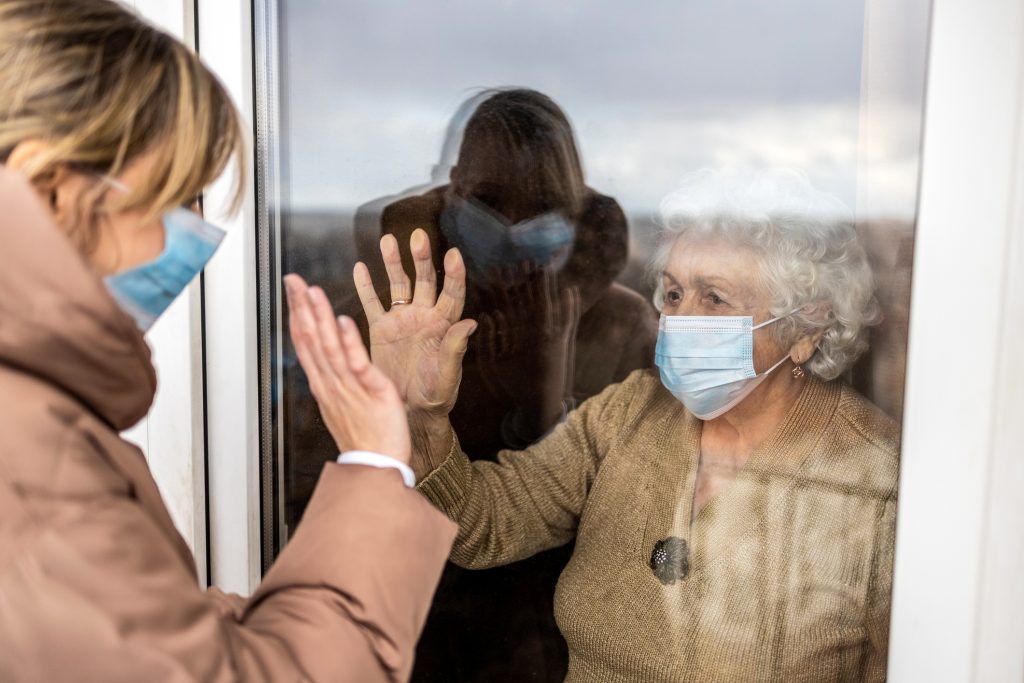
She showed some partial understanding of the disaster of stopping care home visits, which “had far reaching and devastating consequences. Visits provide essential human contact, routine and stability. Family members often provide essential care, helping their loved ones to eat, drink and wash. The profound isolation and sense of abandonment felt by residents as a result of the visiting restrictions resulted in immense emotional harm. There was a significant decline in the health and well being of residents, especially those with cognitive conditions like dementia. The concept of designated visitors and essential care partners was not introduced until the summer of 2020, a delay of several vital months. Most distressingly some people were not permitted to be with their dying loved ones. Through our listening exercise Every story matters we heard how deeply upsetting it was for families to be denied the opportunity to be with their loved ones in those last moments. Many remain wracked by a guilt that they do not deserve to carry.”
She also returned “to the deeply troubling issue of Do Not Attempt CardioPulmonary Resuscitation notices, known as DNACPRs. These notices record a medical decision not to attempt CPR in order to try and save a life. During the pandemic there were concerns that these notices were improperly imposed on groups of people such as people with learning disabilities or older people. I make no apology for repeating what I said in module 3 where these concerns were also raised. This should not have happened. The inquiry has found no evidence of national policies condoning their blanket application. However the sheer speed of the pandemic meant that discussions about advanced care plans which record an individual’s preferences for future medical care and can include discussions about DNACPRs, were too often rushed or non-existent.”
Coverage in the legacy media has largely picked up on the same list of priorities. But of course what Baroness Hallett and MSM journalists have totally glossed over is the likely causes of deaths in care homes and the extent to which they were the direct result of the policies implemented rather than of any winter virus, let alone “a deadly virus which was spreading rapidly”. Even her assumption that it was essential to clear hospital beds is fundamentally flawed and her arguement that this therefore should have been accompanied by full PCR testing and adequate isolation, will leave us in exactly the same situation next time the WHO decides to declare a pandemic.
STAY HOME, PROTECT THE NHS, SAVE LIVES
This was the most perverted message, but those who pointed out that the NHS was there to protect the public rather than vice versa were quickly shouted down.
What is clear, however, from national mortality data, is that excess deaths in care homes in the early weeks of lockdown were largely deaths not linked to covid-19 ie deaths from the very conditions with which the elderly were being discharged early from hospitals.
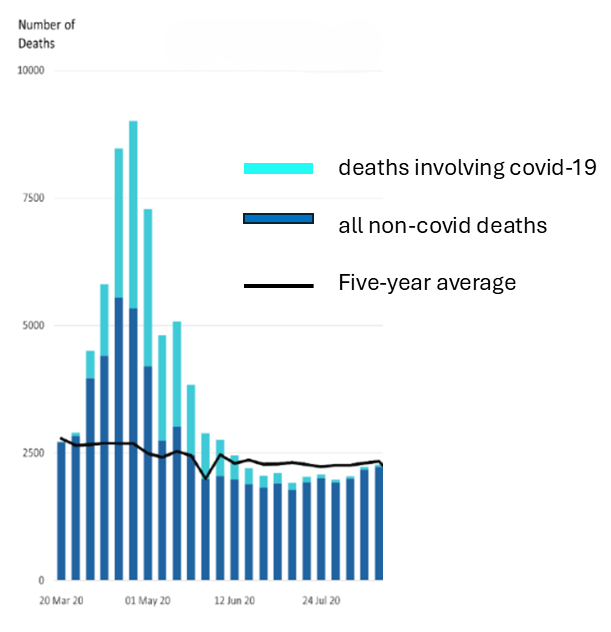
Figure 1. Number of Weekly Deaths of Care Home Residents from 14 March to 28 August 2020, England & Wales (source: Office for National Statistics)
A study of excess deaths in England & Wales in March to June 2020 by place and cause, showed that of excess deaths in care homes and hospices only half were attributed to covid, in private homes this was even more stark with the majority being unlinked to covid-19 whereas in hospitals there was actually a deficit in non-covid deaths. All of this can be attributed to the mantra of ‘STAY HOME, PROTECT THE NHS, SAVE LIVES’.
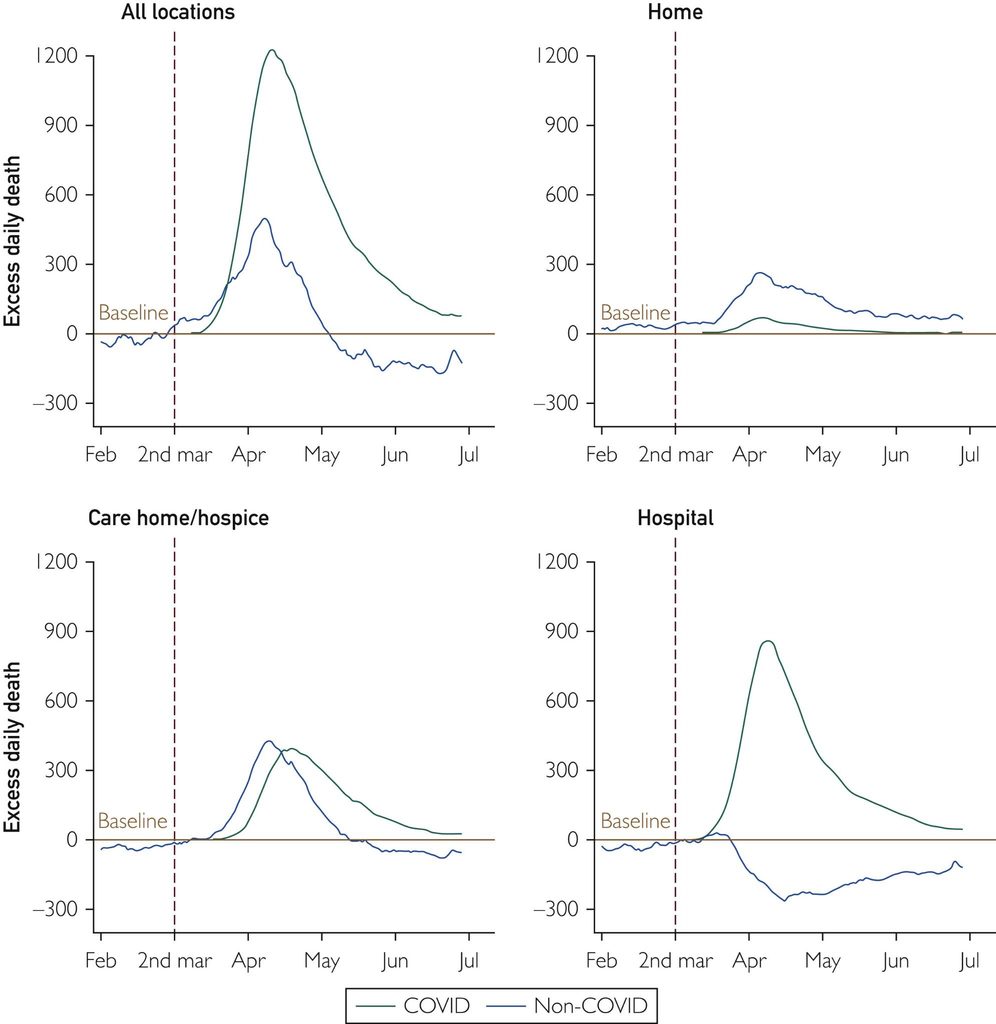
Figure 2. Daily deaths by COVID-19 status and place of death, 7-day moving average, compared to baseline deaths from 2014-2020
This same study revealed a surge in non-covid-related dementia and Alzheimer deaths in spring 2020, clear evidence of the detrimental effect of closing care homes to visitors reported by Hallett: “there was a significant decline in the health and well being of residents, especially those with cognitive conditions like dementia.”
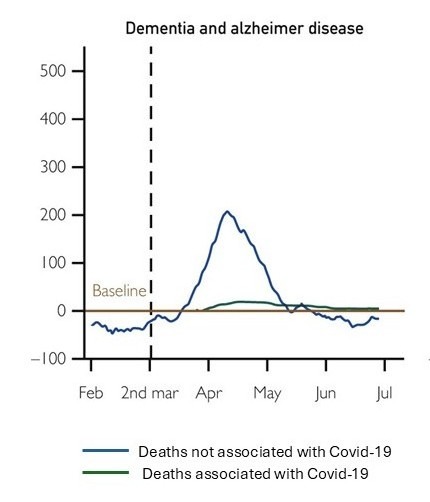
Figure 3. Deaths from Dementia, England and Wales, February to July 2020
Winter pressures ~ what’s new?
Every winter across the NHS, beds are full to capacity and I have often been in the situation of doing 3 ward rounds a day to see if anyone not well enough for home on the morning round, might be able to go later in the day. And yes, elective surgery often gets cancelled as medical patients spill over into surgical beds. Then as soon as the surge in whatever bug is doing the rounds passes its peak, the surgeons start readmitting their most urgent cases and go into catch-up mode. Different hospitals would have different bed availability and would help each other out with admissions.
But in 2020, the whole strategy changed into a ‘one-size-fits-all’ ‘top down’ approach. Thus hospitals across the country were sending their patients home, regardless of whether there was any local surge of activity. Never in the past was I aware of staff discharging whole wards full of patients except for a specific ‘Major Incident’ involving actual multiple acute casualties, yet this was being done for potential patients based on modelling.
You have to ask for whom the beds were being vacated. In theory they were being vacated for sick covid patients but in practice the sickest and most vulnerable were refused admission according to new triage rules.
Misattribution of Deaths
At the same time as the fearmongering was being racked up, post mortems were virtually discontinued and death certification did not require the doctor to have seen the patient during that illness. Covid-19 counted as cause of death in any patient who had received a positive PCR test in the preceding 28 days (initially this applied to all deaths after a positive test!). General practitioners were being encouraged to certify the death as “presumed COVID-19 disease” even in the absence of a test (see guidance from the Chief Medical Officer dated 24.3.2020) “There may be cases where … the medical practitioner is short of information as to the deceased’s recent state of health. In these circumstances, the medical practitioner should consider … the fact that there is a COVID-19 Pandemic, that the COVID-19 Pandemic has struck in the locality, whether there was any evidence of medication suitable for treating the symptoms of … COVID-19 …e.g. analgesics, cough medicine, medicines to reduce the fever, etc. … where there are no suspicious circumstances, it would be considered to be clinically responsible to certify the death as “presumed COVID-19 disease”. This will be accepted as a cause of death by the local authority registrar.’
Families had to appeal to the registrar of deaths to get a certificate changed where the patient had specifically had negative testing.
This officially-encouraged misattribution helped to increase the fear propaganda of numbers of ‘covid-19 deaths’, encouraging the cycle of lockdowns and other restrictions and hence the enthusiasm for the ‘saviour vaccines’. Perhaps more importantly, the misattribution obscured the number of people dying in care homes and in their own homes due to unrelated treatable conditions.
DNACPR and the hidden consequences
Baroness Hallett highlighted the “deeply troubling” blanket DNACPR notices and the distress these caused to families. In the full report, she referenced the existing UK guidance ‘Decisions Relating to Cardiopulmonary Resuscitation (2016) as clearly stating: “Blanket policies that deny CPR or apply CPR to groups of people, for example to all patients in a hospice, nursing home or particular hospital ward, or to people above or below a certain age, are unethical and probably unlawful.”
She did not quote the next sentence: “Decisions or policies that discriminate in favour of, or against, people with defined disabilities would be unlawful under the Equality Act 2010”.
She did also acknowledge that some people may have been denied life-saving treatment as a result. But she failed to acknowledge that the blanket triage rules put in place by many NHS hospital trusts, effectively denied admission to anyone with a DNACPR notice in place. GPs had already stopped visiting, especially if the patient had any symptoms suggestive of ‘covid’. Ambulances in those areas where hospitals were operating such a policy, refused to attend care homes as they understandably said there was no point if they knew the hospital would refuse admission and they would simply have to bring the patient back. This policy was patchy and some parts of the country seemed able to continue providing a reasonable level of service. I personally know GPs who did continue to work normally but for wide parts of the country, the lack of access to both primary and secondary care caused major adverse effects.
The problem was exacerbated by two extraordinary NICE guidelines, NG163 and NG165. Both these guidelines, originally published on 3rd April 2020, were replaced by NG191 in March 2021 and neither of them are available now on the NICE website, but have been uploaded to the HART website here. Both guidelines emphasise, “Find out if patients have advance care plans or advance decisions to refuse treatment, including ‘do not attempt cardiopulmonary resuscitation’ decisions.” Indeed, according to the Hallett report, “the Scottish Government sent a letter to the social care sector on 13 March 2020 that encouraged anticipatory care plans to be put in place “for as many residents as possible (and ideally all residents)” It also said that, where appropriate, there should be a DNACPR decision that is communicated to residents and carers.”
COVID-19 rapid guideline: managing symptoms (including at the end of life) in the community (NG163), has had more media coverage as this was the guidance which encouraged combined use of morphine and midazolam for relief of breathlessness in Covid-19 patients who were considered to be ‘End of Life’. The guideline points out that these drugs do “not have a UK marketing authorisation for moderate to severe breathlessness” but goes on to say “Sedation and opioid use should not be withheld because of a fear of causing respiratory depression”.
You don’t need a medical degree to think that taking two respiratory depressant drugs might not be the best idea if you were trying to shake off a respiratory infection. Moreover, palliative care physicians cautioned about these powerful drugs being used in the community by inexperienced staff and in facilities without resuscitation facilities. In palliative care, they are used for pain relief in patients who definitely have a terminal diagnosis such as advanced cancer, but the skill lies in titrating the dose to give the minimum required for pain relief yet maintaining lucidity. Whereas during 2020, there was significant evidence of these drugs being used indiscriminately and often without the knowledge or consent of the patient or their family.
Midazolam prescriptions in primary care shows an obvious spike in April 2020, in the 4 weeks following the publication of NG163
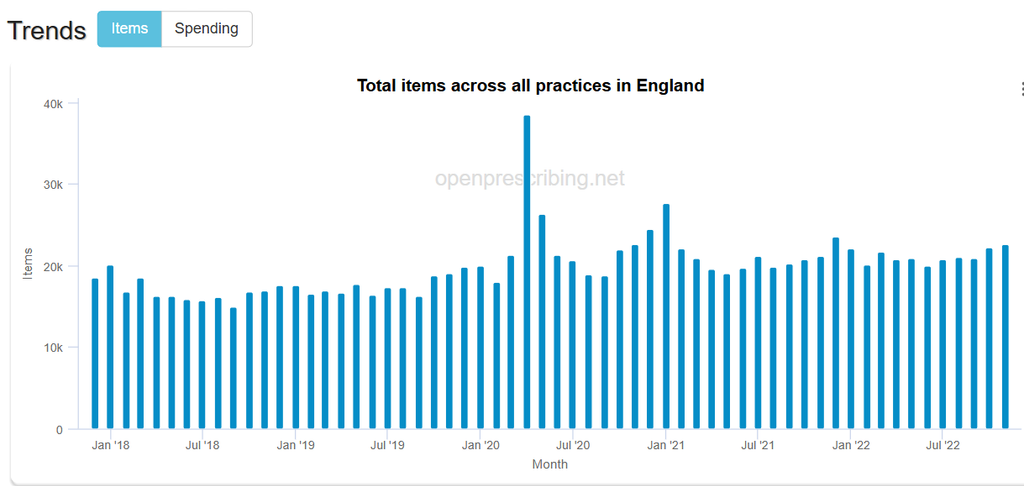
Figure 4. Midazolam prescriptions in primary care, 2018 to 2022, England
The 309-page report on Module 6 does not mention the word midazolam once.
Meanwhile, COVID-19 rapid guideline: managing suspected or confirmed pneumonia in adults in the community (NG165) was published on the same date and included the following statements. “As COVID-19 becomes more prevalent in the community, patients presenting with pneumonia symptoms are more likely to have a COVID-19 viral pneumonia than a community-acquired bacterial pneumonia. As COVID-19 pneumonia is caused by a virus, antibiotics are ineffective.”
In NG165, Section 4 on Management of suspected or confirmed pneumonia opens with this statement “Be aware that older people, or those with comorbidities, frailty, impaired immunity or a reduced ability to cough and clear secretions, are more likely to develop severe pneumonia. Because this can lead to respiratory failure and death, hospital admission would have been [my emphasis] the usual recommendation for these people before the COVID-19 pandemic.” Under paragraph 4.3, health professionals should “Explain.. the risks and disadvantages of hospital admission include spreading or catching COVID-19 and loss of contact with families.” In other words, our primary care physicians were in effect being asked to plug the ‘Stay at home, protect the NHS’ message.
DNACPR decisions interpreted as ‘do not treat’
This heading on page 221 of the 309 page full report, has 2 short paragraphs highlighting this problem:
7.72. The UK-wide professional guidance on DNACPR decision-making explicitly stated that a DNACPR decision applies only to CPR and does not equate to a decision to decline any other care or treatment. [117]
7.74. Some DNACPR decisions were interpreted by healthcare professionals as a decision not to take a person to hospital or not to provide them with treatment (‘do not treat’). This was unacceptable, particularly at a time when people were fearful that medical decisions were being made due to limited resources and rationing.
It is notable that the conflation of ‘Do not Resuscitate’ and ‘Do not Treat’ was not mentioned in the Press Briefing or the Short Statement and gets only such brief coverage in the main report. The hospital triage systems potentially embedded refusal of admission to care home residents and those with DNACPR notices.
Loss of GP visits
In Baroness Hallett’s full report, Chapter 4 covers ‘Visiting Restrictions in Care Homes’, with a whole section on ‘Healthcare visits’. The report does point out the problems of lack of face-to-face visits and recommends that in future these should be continued unless there is an exceptional risk involved. It was noted that lack of visits were linked to inadequate care, for example, “The Public Health Agency (Northern Ireland) reported that during the first wave of the pandemic, 42% of residents’ needs were not met or only partially met by external healthcare professionals.” (para 4.56). In Scotland, only 4 of 29 authorities reported that visits by healthcare professionals had not been “limited between March 2020 and June 2022”. The use of remote consultations, encouraged by NICE guidance, were problematic and care home workers facilitating these consultations described “feeling as though they had taken on the role of doctors and nurses, without the proper training or necessary qualifications.” (para 4.60). Many residents experienced a deterioration in their physical and mental health. The nature and severity of health conditions worsened as activity and movement decreased and there was less or unavailable support, diagnosis and treatment, including pain relief. (4.63.)
“There were potentially avoidable hospital admissions resulting from GPs not being “prepared to visit a care home”. This placed even greater pressures on those providing care and the hospitals. Where they were unable to access healthcare services, staff and residents reported feeling “unsupported and exposed”.” (4.64)
Guidelines NG163 and NG165 in their opening section on infection risk state: “Minimise face-to-face contact by offering telephone or video consultations” (1.3).
The deleterious effects of loss of family visits was rightly highlighted in Baroness Hallett’s press statement but the lack of any mention of the effect of loss of primary care on diagnosis, treatment and referral to hospital where necessary, was a major omission as this is one of the puzzle pieces in the whole debacle.
Loss of family visits
Baroness Hallett clearly highlighted the devastating effect of care homes shutting their doors to family and friends. As she rightly points out, family members are often key helpers with meals and medications, quite apart from the psychological effect. “stopping these visits had far reaching and devastating consequences. Visits provide essential human contact, routine and stability. Family members often provide essential care, helping their loved ones to eat, drink and wash. The profound isolation and sense of abandonment felt by residents as a result of the visiting restrictions resulted in immense emotional harm. There was a significant decline in the health and wellbeing of residents, especially those with cognitive conditions like dementia.”
One part of the control of visiting which no-one discusses is the indirect effect on family members, who found themselves forced to be compliant in a measure which most of them knew would be detrimental to their elderly and frail relatives. Remember the retired nurse who took action by trying to take her 97-year-old mother home and found herself being arrested by police called by the care home?
Another indirect impact of care homes closing their doors is the well-described detrimental effect of psychological trauma on the immune system, as discussed in a wide-ranging review article here.
Evidence from witnesses to the UK and Scottish C-19 Inquiries
BiologyPhenom has meticulously covered numerous hours of live testimony and written witness statements to both the Scottish and the UK Inquiries, all available on his substack. His summary of Module 6 is here. Also the hearings are all still available on YouTube. The Impact statement was played on the first morning of the Module 6 hearings 30th June 2025. BiologyPhenom has made a compilation of witness statements about DNACPR notices. Also other examples of the inhumane and illogical visiting rules:
Catherine Griffiths (a retired A+E nurse), member of COVID-19 Bereaved Families for Justice Cymru, describes window visits to her elderly father, then garden visits but still masked and 2 metres apart, and finally his discharge from hospital after a fall, only to be left without fluids.
Caroline Abrahams, Director AGE UK testified that “In some places these policies or informal practices amounted to effective bans on older people being admitted to hospital, whether they had Covid-19 or not.”. “Some care home residents were denied admission to hospital for any reason (including fractures, strokes and injuries)…..In one example, we were told by a senior clinician overseeing a community hub through the pandemic that any older resident with respiratory symptoms was assumed to have contracted Covid-19 and would not be considered for further care. He described intervening personally on behalf of a resident he in fact judged to have a case of treatable pneumonia.’’
Helen Hough, former care home owner and member of Covid-19 Bereaved Families for Justice Cymru, described end-of-life drugs being supplied when what she had requested was oxygen. She was told that care home residents would not be considered for ventilation. Consultations were “conducted over the telephone…No GP attended the care home until well into 2021”
Witnesses at the Scottish Inquiry raised similar concerns about the loss of even basic care. For example:
Prof Donald Macaskill, Chief Executive, Scottish Care was scathing about levels of basic care let alone access to hospital care. ‘‘We are coming across (late 2020) instances where individuals were being denied admission into an NHS hospital..individuals who could have received..in some cases LIFE-SAVING care and support but were NOT able to access that simply because their place of residence was a care home and no other postcode.’’
Marie Paterson is Chief Inspector of Adults at the Scottish Care Inspectorate, the independent body for the scrutiny and regulation of care services. Her testimony to the Scottish Inquiry summarises all the problems outlined above – blanket DNACPR notices on whole care homes; the Care Inspectorate were replaced by Public Health Scotland who did no inspections; care-home residents having personal possessions forcibly removed from their rooms; residents becoming subdued and often dehydrated; pressure sores and other signs of neglect; lack of routine care; refusal of family visits in some cases for over a year.
Police investigations
The Scottish police have launched a formal investigation, Operation Koper, into care home deaths following some testimony given, including an allegation of a forged signature on a DNACPR notice. But meanwhile it has also come to light through FOI requests that UK Police working under Operation Talla, had been specifically told not to investigate any allegations of crimes related to pandemic policy, but were required to monitor and effectively criminalise so-called ‘misinformation’.
Media coverage of Module 6 report
Perhaps not surprisingly, most of the media coverage of the latest UK Inquiry report simply regurgitated comments from Baroness Hallett’s press briefing.
The Guardian: “UK government failures led to Covid spreading ‘like wildfire’ in care homes, inquiry finds”
The Independent: “Care home residents were sacrificed to save NHS during Covid pandemic, damning inquiry report finds”
Yahoo News: “Matt Hancock’s care home protective ring claim ‘unfounded’, Covid report finds”
Telegraph: “Covid care home failures were a death sentence, say bereaved families”
ITV News: “Families’ anger after Covid Inquiry dismisses Matt Hancock’s ‘protective ring’ claim”
But all of these reports uncritically accept Baroness Hallett’s interpretation of a “deadly virus which was spreading rapidly”, and hence the assumption that too little was done too late. None of them questioned the necessity of clearing hospital beds or the unethical logic of clearing hospital beds only to then refuse admission to those at highest risk of all-cause mortality.
Right Times and Daily Sceptic both raised the excessive use of midazolam and Maajid Nawaz on GBNews was forceful in his denunciation of the effects of DNACPR and end-of-life drugs, as the likely main cause of the care home deaths.
A deadly loop
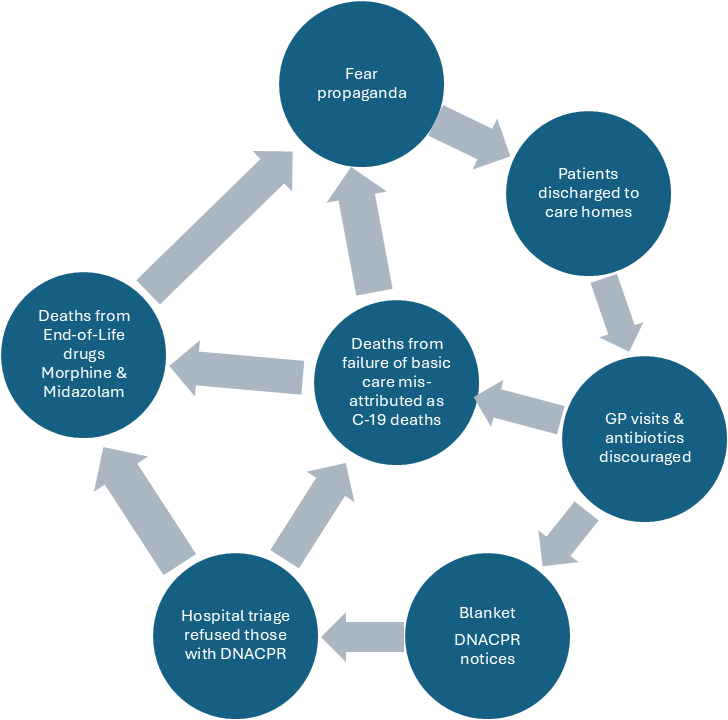
What the Module 6 report failed to bring out was the deadly loop of fear propaganda, blanket DNACPR notices, hospital triage policies, end-of-life drugs and misattribution of deaths, all feeding back into the daily death reports and the fear propaganda. All of this creating the backdrop for the arrival of the ‘saviour vaccines’.
And all for what?
At best a variant of a coronavirus with an infection rate comparable to double a bad flu season, or indeed a late flu relabelled as a ‘novel coronavirus’. At worst a deliberate withholding of normal medical care from the most vulnerable members of our society to create the excess deaths, combined with the sharing of a strip of lab-produced genetic code used to create PCR tests and novel-technology mRNA-based vaccines. Almost 6 years later, these products are being pushed onto the very same frail care home residents.