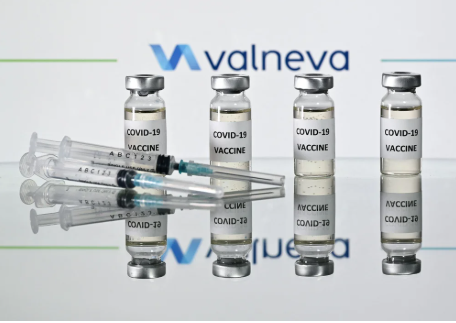
Like AstraZeneca, it was dropped in favour of Pfizer & Moderna, but why?
Dr Ros Jones
At the beginning of 2020, when the first rumours were circulating of 4 deaths from pneumonia in China (a country of 1.4 billion population), few people would have had any concept of the panic and rushed decisions that would be made only a few weeks later by governments from across the world.
Lockdowns were a novel concept, a word previously associated with prison riots or (in US dictionaries) with children locked into classrooms if a gunman entered the premises. But in no time at all, the likes of Neil Ferguson were noting that Italy had followed China into lockdown so ‘maybe we can get away with it’. Next information from our Chief Medical Officer and Chief Scientific Officer was that a vaccine would probably take 2 or 3 years, and given the low infection fatality rate (<1%) a rushed vaccine could not be justified. The public was initially led to understand that the frail and elderly should stay at home for 12 weeks but that after a short 3-weeks ‘to flatten the curve’ everyone should expect to catch the virus and obtain natural immunity.
But something changed and despite the WHO downgrading the emergency from its initial ‘High Risk’ category, it was suddenly full steam ahead with numerous companies competing to get a vaccine ready to market. The first out of the blocks was BioNTech, a small German biotech company with no products to its name, but who linked up with Pharma giant, Pfizer, to market its new modified mRNA product. Following not far behind was Moderna, also with an mRNA product and AstraZeneca using a viral-vector-DNA system. The mRNA technologies had never been used successfully in humans (Moderna had been trying for decades to make a cancer vaccine but found the lipid nanoparticles (LNPs) required to coat the genetic material to transport it into the cells, were too toxic for repeated dosage in cancer patients. It appears they just hoped that two doses approved under an emergency authorisation might just get them their first success). AZ’s DNA-based system had been used to make an ebola vaccine and a limited amount was used for vaccinating close contacts at very high risk of an infection with a high case fatality rate. Millions of doses were stock-piled in the Democratic Republic of Congo but never rolled out to a healthy population.
A bit further down the road were Valneva, with an inactivated whole virus vaccine and Novavax, using a recombinant spike protein. In Sept 2020, Valneva announced a Major COVID-19 Vaccine Partnership with U.K. Government. For many people worried about the lack of any medium or long-term safety data of the mRNA technology, a standard vaccine looked like a promising option, worth waiting for you might think. An option which in autumn 2020, I was seriously considering; how times have changed!
By April 2021, we read Valneva Reports Positive Phase 1/2 Data for Its Inactivated, Adjuvanted COVID-19 Vaccine Candidate, VLA200 and Valneva Reports Positive Phase 1/2 Data for Its Inactivated, Adjuvanted COVID-19 Vaccine Candidate, VLA2001. All good you might think and certainly the people of Livingston in Scotland, where the vaccine was due to be made, were enthusiastic. Admittedly the results, like for so many drugs nowadays, were announced by the company rather than published in a peer-review journal.
But then to universal surprise, in Sept 2021, in response to questions from the local Scottish Nationalist Party (SNP) MP, health secretary Sajid Javid stood up in the House of Commons and confirmed the immediate cancellation of the UK’s contract for the Valneva covid vaccine. When asked why, Hansard quoted Mr Javid as saying “There are commercial reasons why we have cancelled the contract, but I can tell her that it was also clear to us that the vaccine in question that the company was developing would not get approval by the Medicines and Healthcare Products Regulatory Agency (MHRA) here in the UK.”
This statement was rebutted later that day by a statement from the MHRA (the UK’s medicines regulatory authority), who reported that the rolling programme of information submitted in the approval process was progressing as expected and they anticipated approval in the next few months. Interestingly, the Hansard report was later corrected to “but I can tell her that it was also clear to us that the vaccine in question that the company was developing has not yet gained approval by the Medicines and Healthcare products Regulatory Agency here in the UK, and may not [do so]”
News reports at the time were generally unquestioning of the reasoning behind the decision Government cancels contract with French vaccine-maker Valneva apart from some dispute about an unspecified agreement breach.
But only one month later in Oct 2021 Valneva Reports Positive Phase 3 Results for Inactivated, Adjuvanted COVID-19 Vaccine Candidate VLA2001.
A BMJ review and subsequent correspondence questioned many aspects of the decision to cancel the contract. Kate Bingham, the erstwhile ‘Vaccine Tsar’, weighed in in Dec 2021 by asserting UK Government ‘short sighted’ to scrap Scottish vaccine contract with Valneva and in Jan 2022 a letter to the BMJ commented that “This significantly raises the question of political interference into MHRA’s processes and predetermined bias, considering the Health Secretary made damaging comments before adequate results are made available.”
The Novavax protein-based vaccine was approved in February 2022 and was used for boosters though always way behind the Pfizer & Moderna market share. Finally, in April 2022 and contrary to Sajid Javid’s negative predictions, regulatory approval of COVID-19 Vaccine Valneva by MHRA went ahead and was followed in quick order by the European Medicines Agency (EMA). By June 2022, Valneva was the first covid-19 vaccine to receive full marketing approval by the EMA.
Valneva’s marketing approval was based on immune testing, i.e. antibody production, rather than any clinical measure of efficacy and there was no placebo, the control group receiving AstraZeneca, which of course had by then been effectively dropped (see above). One likely advantage of Valneva over AstraZeneca (and hence over Pfizer & Moderna too) was a good antibody response to the nuclear capsid protein as well as spike protein, which in theory should give broader cover. Further results from a randomised trial were published in the Lancet in December 2022, reporting that Valneva gave a higher immunoglobulin response than the comparator AstraZeneca in a phase 3 trial.
BBC News Scotland reported in 2023 that the scrapped covid vaccine deal with Valneva cost UK taxpayers £358m. It was not only the UK that cancelled contracts. The EU also dropped out and Valneva ceased production of the covid vaccine after making only 10 million doses and decided to concentrate their efforts on travel vaccines. More recently, they are laying off staff and selling production facilities as travel is down due to the geopolitical climate. Ironically the company has partnered with Pfizer to produce a Lyme disease vaccine – in theory they could flog that to stay-at-home dog walkers.
So this brings me back to the question in the title of this piece. Using the simplest principle of ‘follow the money’, it is clear that Moderna, in particular, and Pfizer to a lesser degree, both had a desperate commercial need for the mRNA vaccines to succeed. Moderna had been investing in modified-RNA research for almost two decades (hence the company’s name), in hopes of producing effective cancer vaccines. But they had never got anything to market, stymied particularly by the toxicity of repeated doses of the coating LNPs. An emergency use authorisation replicated worldwide, gave a perfect opportunity for a poorly tested gene-product to be given to literally billions of people. Lack of proper post-marketing surveillance provided the self-fulfilling prophecy of ‘Safe and Effective’. Sure enough, Moderna acquired UK government funding to build research and production facilities at Harwell near Oxford. This partnership was announced with much fanfare in December 2022 by which time AstraZeneca and Valneva had been shown the door.
If we assume that enforced lockdowns and the trashing of Vitamin D, ivermectin and hydroxychloroquine or even just standard antibiotic use, were required to maintain the demand for an urgent vaccine, then denigrating the slightly slower standard technology product in favour of the all singing all dancing new mRNA drugs would at least be logical.
The logic seems to be working. In 2024, the FDA approved Moderna’s new mRNA-based RSV vaccine, mResvia, although this is not yet licenced in the UK. It was licensed when trial participants had a median of 112 days follow-up, so further safety data post-approval will be vital (though unlikely to occur, judging by post-marketing surveillance or lack of for the covid vaccines). Now in August 2026, mFLUSIVA, Moderna’s mRNA-platform flu vaccine, has gained FDA approval, despite trials showing significantly higher adverse events than the standard technology comparator (grade 3 systemic effects rose 6-fold and deaths were more than doubled). Several other mRNA vaccines are in the pipeline against zika, chikungunya, ebola and heaven knows what else. All presumably following the ‘100 days to market’ aim. Results from a cancer vaccine against melanoma are hailed as promising. Of course, cancer vaccines is where Moderna started. Without prejudging the long-term results, at least in theory the recipients were already sick and in need of some treatment, unlike the huge numbers of healthy young people with irreversible damage from the mRNA covid-19 shots. Meanwhile, BioNTech’s bowel cancer mRNA vaccine trial has just been halted because of “a numerical imbalance in overall survival between the patient groups in the study” (presumably double speak for more deaths in the vaccinated than the placebo group!).
Moderna’s mission is “to deliver the greatest possible impact to people through mRNA medicines.” One can only pray that the impact is for better rather than worse.
As far as I am aware, neither Pfizer nor Moderna have yet carried out the proper carcinogenicity, teratogenicity and reproductive studies which would normally be required for a gene therapy as opposed to the simplified vaccine regulations. Even the basic pharmacology of where does this product go and how long does it persist in instructing the recipient to produce whatever protein it is coded for. Whether it is C-19’s ‘spike protein’ or RSV’s ‘prefusion F’, personally, I would want to see a reliable dose prediction with an OFF switch, before going anywhere near these products.
POSTSCRIPT: If any HART readers have any FOI material on emails etc surrounding the Valneva decision in September 2021, please get in touch. Unfortunately, Sajiv Javid seems to have looked after his diaries more carefully than either Matt Hancock or Anthony Fauci!