Terminally Ill Adults (End of Life) Bill had its frist reading on 16th October. Yhe Welsh parliament have voted against it. An open leeter to the Prime Minister is included in this article.
Politics
The People’s Vaccine Inquiry on Tour
The People’s Vaccine Inquiry was recently invited to go to Belfast and Dublin for events for those with vaccine injuries. The first meeting was held in Stormont Castle with several Members of the Legislative Assembly in attendance and a real feeling politicians are beginning to listen.
RIP Dr Jackie Stone, The COVID Hero
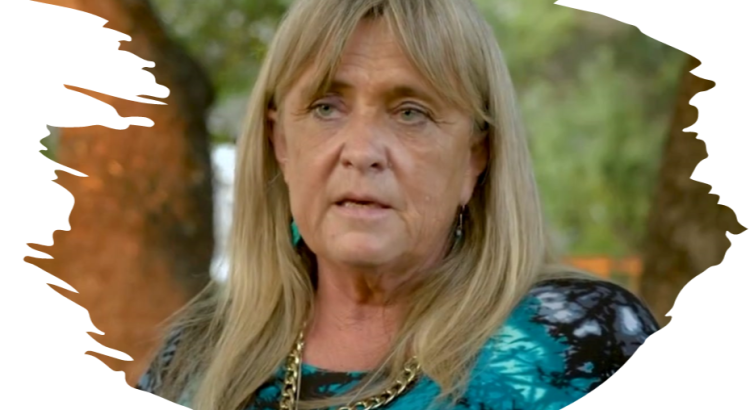
On Thursday 3rd October 2024, Dr Jackie Stone ended her life and a light went out in the world. Hounded by the medical authorities for seeking to give her patients the best care she could offer and stripped of her medical licence and her raison d’être. A shocking indictment of the world we live in.

America’s Medical Monopoly: An Injection of Truth
The General Medical Council (GMC) is in overdrive, with medical professionals being erased from the register for ‘wrongspeak’. Yet this is not a new phenomenon. If we delve into the history of how our existing ‘medical monopoly’ was established, it is an all too familiar disturbing playbook of censorship, corruption and subversion of ethics that spans over 130 years in the making.

The Darzi Review of the NHS
The Government had asked Lord Darzi, an academic surgeon at Imperial College London, to conduct an ‘independent’ review of the National Health Service. In September 2024, his 163-page document was published. While highlighting some of the major flaws in the NHS – long waiting lists, an increase in the number of avoidable deaths, poor productivity – HART’s Dr Gary Sidley finds Darzi’s proposed solutions trite and uninspiring, comprising little more than appeals for additional taxpayer funding and a ‘tilt towards technology’. It seems nothing has been learned from the increasingly evident major deficiencies in the NHS, powerfully illustrated by some of its counterproductive responses to the covid event. Unless you want just more of the same in the future, read Dr Sidley’s alternative proposals.
Another letter to the four Chief Medical Officers
CCVAC members wrote to the four Chief Medical Officers in Septmeber 2021 to counsel against approving covid-19 vaccines for use in healthy children without waiting for cardiac followup studies. We have written again to point to the 60% ongoing cardiac damage in those suffering vaccine-induced myocarditis

Consultation on new Public Health Act for Northern Ireland
Northern Ireland is having a consultation about a new Public Health Bill which would widen the scope of the current legislation to create permanent powers on an ‘all hazards’ basis. It includes hidden in paragraph 143 that the regulations may require a person to be vaccinated or to receive other prophylactic treatment. Say goodbye to bodily autonomy.
An Open Letter to yet another Prime Minister
An open letter to Sir Keir Starmer about vaccine safety. Will he continue the mistakes and obfuscation of the previous government or will he offer change?

Our institutions are hollowed out
This is what totalitarianism looks like Republished below is an article from Jonathan Engler, first published 19th August, on his substack page, where he looks at two examples from here in the UK: The first is The Royal College of Nursing, which says (of the recent protests): “These scenes around the country are nothing short […]
Covid-19 Vaccines: Censored Facts and Hidden Harms
The People’s Vaccine Inquiry was set up by five different expert groups who were all concerned at the delays in the UK Public Inquiry Vaccine Module. Witness statements and video interviews are available to the public and to share.
Governments always know what’s best for us
” In every sphere of daily life, our thoughts and actions are being manipulated, often covertly, so as to align them with what the state’s technocrats have deemed to be in our best interests; openness and transparent attempts at persuasion are no longer deemed necessary.” Does this describe Britain today?

The Good Fight
A heart felt rallying cry to stop attributing blame and start focusing on how each of us can make a difference. We’re all different, but in essence, as long as we’re all fighting for humanity, then we’re all on the same side, we are all allies.
Covid-19 Response and Excess Deaths
On 18th April, Andrew Bridgen finally secured a full length debate on this vexed topic, the original text of which is available here. Full length in theory, but shortly before the debate was due to begin, the deputy Speaker told him he only had 15 minutes instead of the 30 minutes he had prepared. After a complaint to the Speaker’s office the compromise was 20 minutes.
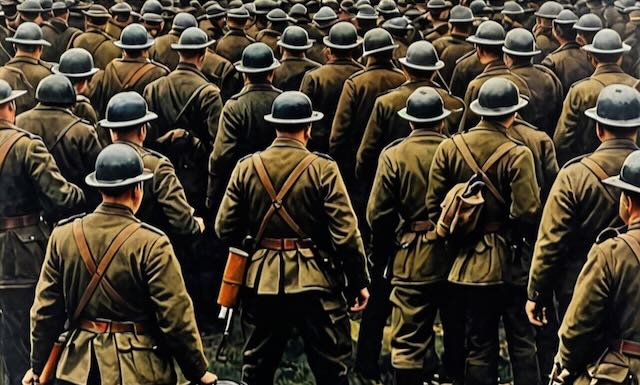
Book Review – Will Ellsworth-Jones’ We Will Not Fight (2008)
Like with so much history that is shrouded by the mists of time, the detailed tales of the thousands of British men who refused to fight in the First World War make for fascinating reading. These conscientious objectors came from all walks of life – socialists, communists, pacifists, Quakers, Jehovah’s witnesses, Methodists, the Bloomsbury Set – and found a unity of purpose in their protest, allowing them – for a time being at least – to put aside quite substantial ideological differences.
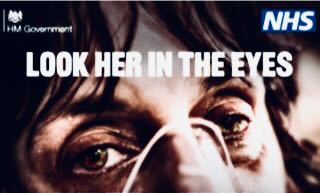
What authority would scare and shame an already frightened population?
In the knowledge that people are already in a state of heightened anxiety, what government would choose to further frighten and shame them? When citizens have amended their lifestyles in order to function under difficult circumstances, what government would seek to actively disrupt these necessary and understandable adaptations?

Gove’s Ministry of Truth Reporting for Duty
For those paying attention to the rising tide of totalitarianism here in the UK, the latest from The Ministry of Truth, AKA HM Government should really make your blood run cold. Michael Gove has now overseen the redefining of extremism.

MPs have been busy writing letters
Graham Stringer MP, co-chair of the Pandemic Response and Recovery APPG has sent yet a third letter to Steve Brine MP, Health and Social Care Committee chairman, raising further concerns about the MHRA.
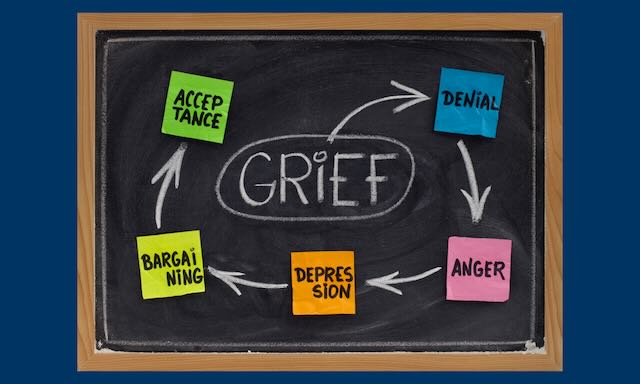
Trying to bargain away the excess deaths problem
Politicians fancied themselves as heroes in 2020. They were saving lives. Having played doctor with the population they are now being shown the fallout and it is not pretty. They are working through the stages of grief.